























For millions of students, the school day does not begin when the first bell rings, or even when they walk through the front door. It begins at the bus stop, in the backseat of a car, or on a long walk to school. While often overlooked, reliable transportation is not merely a logistical concern; it is a foundational pillar of educational equity. When transportation is consistent, safe, and efficient, it empowers students to succeed. Conversely, when it is unreliable, long, or unsafe, it acts as a silent, powerful barrier to academic achievement, contributing to chronic absenteeism, emotional fatigue, and educational inequality.
Academic Performance and Attendance
Transportation barriers are directly linked to chronic absenteeism and tardiness. When students cannot rely on a bus or ride, they miss classes, leading to lower grades and higher dropout risk. Studies indicate that school bus eligibility reduces the probability of chronic absence by 20% to 25% for economically disadvantaged students.
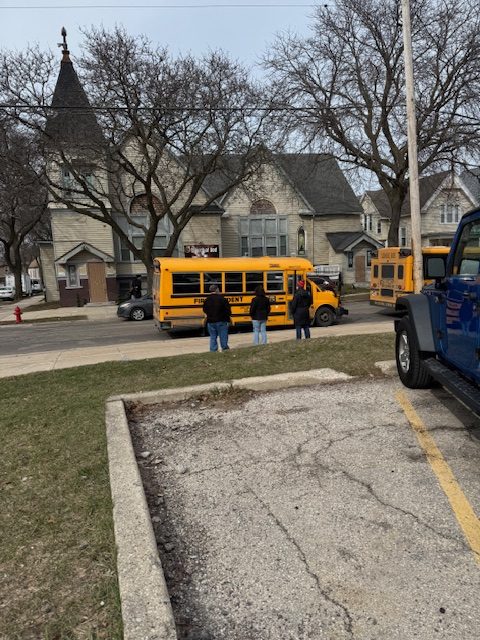
According to Ms. Shontrice Cross, “Some of the common reasons that buses are late are traffic (which can be backed up) and finishing up the routes before they get to us (the middle school routes)”. When buses are delayed, routes are cut, or cars break down, students miss crucial early-morning instruction, leading to higher rates of tardiness and missed academic milestones. Furthermore, for students choosing schools outside their neighborhood, commutes exceeding 45 minutes can lead to lower test scores
The human cost of these systemic failures is felt acutely by students. At Bay View High School, senior Salomae Ramirez highlights the domestic “ripple effect” of transit delays: “When the bus is late, my entire household is disrupted. My family members, who work third-shift schedules, have to sacrifice their sleep to drive me. Knowing their rest has been compromised leaves me feeling frustrated and anxious before I even enter the building.”
While some students, like senior Brittany Gomez, find ways to mitigate the impact through flexible first-hour instruction, the overarching reality remains: when commutes exceed 45 minutes, standardized test scores tend to plummet, signaling a clear threshold where distance degrades performance.
Sleep, Health, and Emotional Well-being
Long, stressful commutes diminish the time students have for homework, extracurricular activities, and sleep. Research demonstrates that a one-minute increase in commute time is associated with a 1.3-minute reduction in sleep; consequently, a student with a 15-minute longer commute than their peers loses nearly 20 minutes of sleep daily. This loss of sleep impacts student alertness, emotional regulation, and mental health in class.
Reduced Access to Opportunities
Transportation issues often act as a barrier to equity, preventing students from participating in after-school tutoring, sports, or clubs—experiences that are crucial for a well-rounded high school experience and college preparation. Furthermore, when students cannot reliably get to school, they may miss out on essential services such as hot meals, counseling, and specialized education support.
In many districts, transportation challenges are identified as a top contributor to chronic absenteeism, sometimes ranking higher than health issues. Cross said, “If a bus does not come, we would call the transportation hotline and speak with the operator and see if they can send out what is called a ‘stranded bus.” This bus can take up to an hour to come if a student is stranded and has no other way home, which is why we stress to students to get right on their bus after school.
Transportation is a critical, yet frequently undervalued, component of educational success. By acknowledging that reliable transport is inseparable from academic performance, schools and policymakers must prioritize fixing transportation inefficiencies. Ensuring every student can reach school safely and on time is not just a matter of logistics; it is about ensuring equality of opportunity for all.