























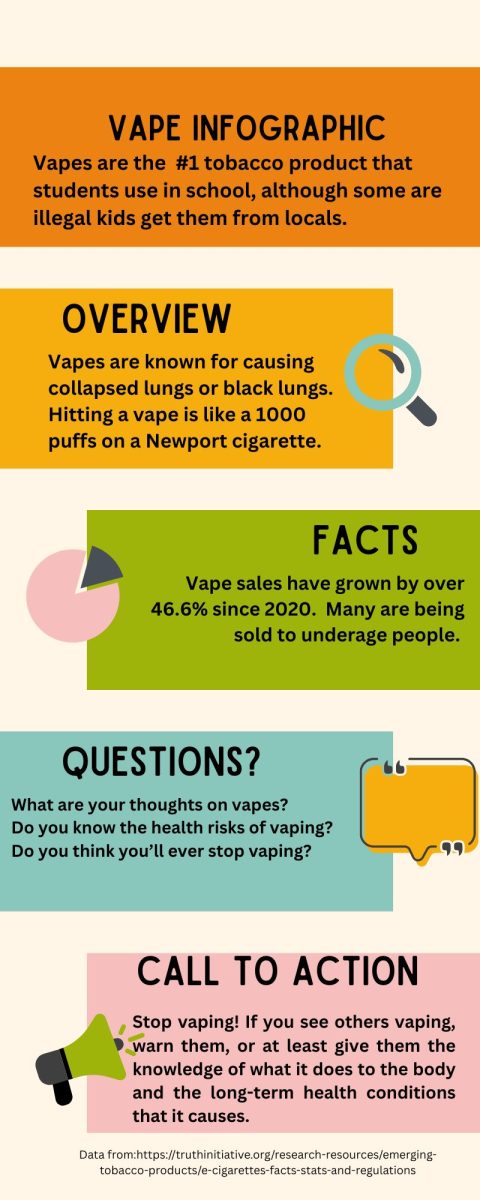
E-cigarettes remain the most common tobacco product used by students, with many obtaining them from unauthorized sellers despite strict age restrictions. Health experts have linked vaping to severe conditions such as collapsed lungs, noting that some devices can deliver the nicotine equivalent of 1,000 cigarette puffs. While the products are popular among adults, their prevalence in schools has sparked a nationwide debate over safety and regulation.
According to the Truth Initiative, e-cigarettes are the most prevalent tobacco product in American middle and high schools. In a recent survey, educators and counselors across the United States expressed growing concern over how nicotine impacts the daily lives of their students.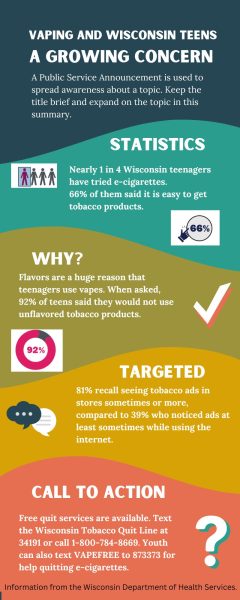
Assistant Principal Ms. Santa Cruz believes the trend has had a lasting negative impact on the student body. “I feel like they ruined the young generation,” Santa Cruz said. “The chemicals are very bad, and we don’t have enough research on their side effects.”
School Nurse Lynette Stefanec warned that the chemical makeup of many devices remains a mystery. “Vaping is still a new product, and there is still not a lot of information about the long-term side effects,” Stefance said. She noted that because many ingredients are unknown, users risk severe allergic reactions. “Realistically, you’re not supposed to inhale anything besides oxygen.”
These chemical dependencies often manifest as behavioral issues that disrupt the learning environment. Stefance reported that students frequently struggle with focus and heightened anxiety when they are unable to use their vaping devices.
Student perspectives on the issue vary widely. “Shawn”, a student who vapes, acknowledges the health risks but says they do not influence his current choices. “I like vaping, and I know about the health risk, but I don’t care about it,” he said, noting that he believes he will eventually quit.
Others advocate for a total cessation of use. Yani, a student, argued that the habit could be fatal and believes the practice needs to end. Emilo echoed this sentiment, stating that he has never vaped and feels uncomfortable when his peers use the devices. “I hate them,” Emilo said. “I don’t like it when my friends do it.”
Since 2020, e-cigarette sales have surged by more than 46.6%. While law enforcement has tightened regulations and increased penalties for unauthorized sales to minors, some businesses continue to bypass age restrictions. Research indicates that nicotine can rewire the adolescent brain, potentially leading to future substance abuse, mood swings, and cognitive difficulties in the classroom.
Despite the rising sales and new “smart vape” technologies featuring Bluetooth and built-in games, there is a growing movement toward cessation. Recent data shows that nearly 67% of young nicotine users have resolved to quit in 2026, citing both mental and physical health as their primary motivators. For educators and health professionals, the hope is that increased education and stricter retail enforcement will finally outpace the industry’s influence.